info@phasegroundinvestigation.co.uk

0330 133 0421

What Is a Ground Investigation & Why Is It Important?

A ground investigation is a structured assessment of the conditions beneath your site. It involves gathering data about soil, rock, groundwater and any potential environmental hazards.

A thorough investigation helps you:

  • Understand soil strength and stability
  • Identify potential contamination
  • Assess groundwater levels
  • Determine suitable foundation types
  • Reduce development risks and unexpected costs
  • Ensure compliance with planning and construction regulations

Ground investigations form a critical early stage in assessing the GeoEnvironmental status of any development site.

A complete ground investigation typically includes:

  • Geotechnical Analysis – Soil composition, bearing capacity and structural stability
  • Environmental Assessments – Contamination risks, regulatory compliance
  • Hydrogeological Studies – Groundwater levels and movement
  • Structural Risk Assessment – Identifying possible subsurface hazards

Our experienced geotechnical engineers and drilling specialists use modern techniques and equipment to deliver accurate, planning-ready results.

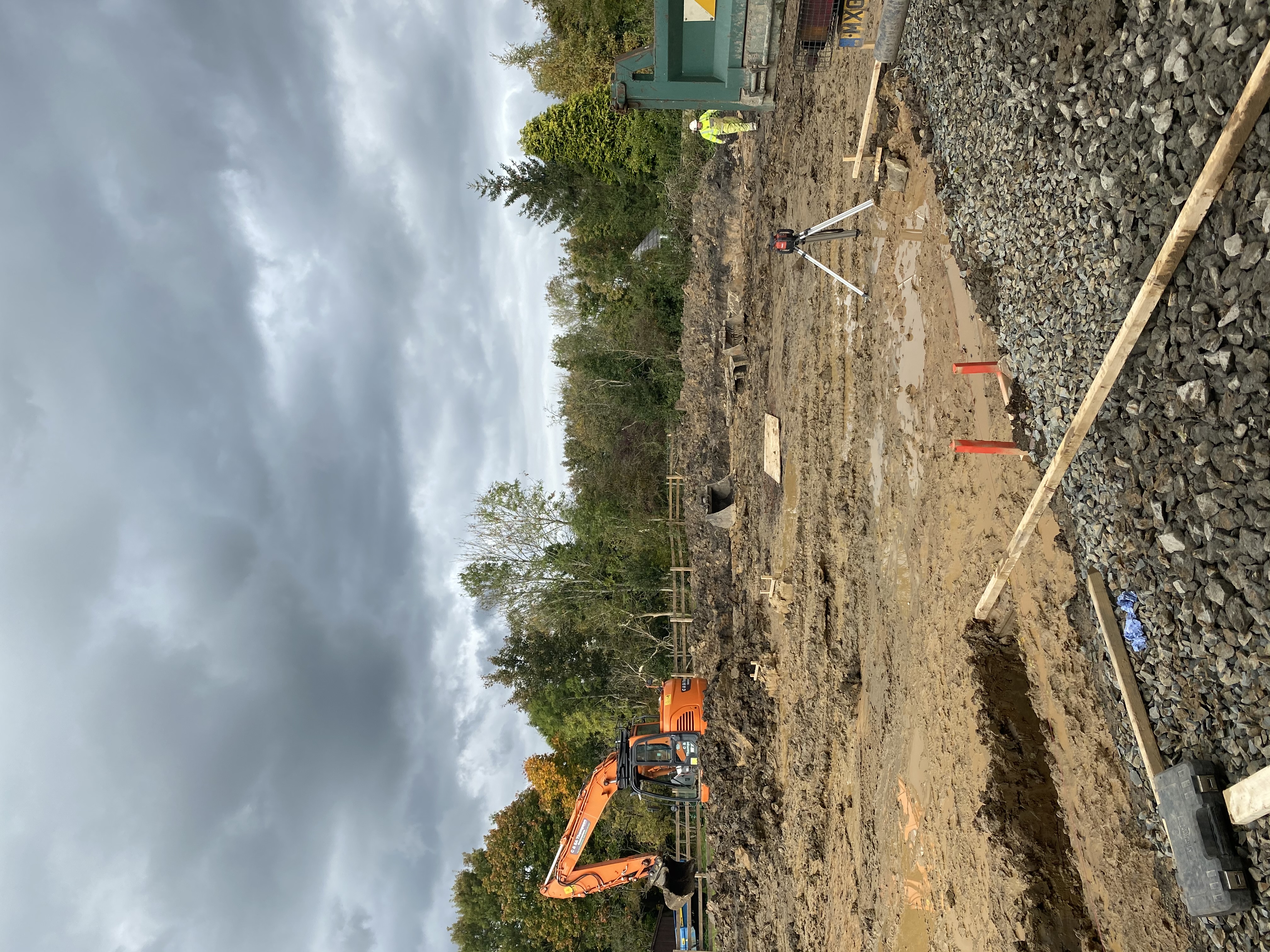
Construction site with muddy ground, orange excavator, a construction worker in yellow safety gear, and a tripod near a green truck under a cloudy sky.
Image

Our Core Ground Investigation Services

Below is an integrated, streamlined version of your key service areas — grounded, clear and client-friendly.

Trial Pits

Trial pits allow direct visual inspection of soil layers, shallow geology and groundwater. They are typically excavated to depths of 1–4 metres and are one of the most effective ways to assess surface-level conditions.

Trial pits are used for:

  • Foundation design
  • Identifying made ground
  • Assessing groundwater levels
  • SuDS and soakaway testing
  • Locating buried structures and obstructions

Trial pits can be excavated manually or by machine depending on access.

Image
Image

Rotary Drilling

Rotary drilling is designed for deep, dense or hard ground conditions, providing high-quality core samples and deep boreholes.

Rotary drilling is ideal for:

  • Rock coring
  • Coal, chalk, sandstone and hard strata
  • Installing deep groundwater or gas monitoring wells
  • Reaching depths of up to 100m
  • Sites where precision drilling is required

This technique is used extensively on complex or high-risk sites.

Cable Percussion Boreholes

Cable percussion drilling is a versatile method used to obtain soil samples and record stratigraphy at depths of up to 50m.

Different cutting heads allow testing of:

  • Soft cohesive soils
  • Granular soils
  • Dense layers and shallow rock

Cable percussion boreholes are a core part of geotechnical and environmental investigations.

Image
Image

Cable Percussion Boreholes

Cable percussion drilling is a versatile method used to obtain soil samples and record stratigraphy at depths of up to 50m.

Different cutting heads allow testing of:

  • Soft cohesive soils
  • Granular soils
  • Dense layers and shallow rock

Cable percussion boreholes are a core part of geotechnical and environmental investigations.

Window Sampling

Window sampling provides quick, efficient soil samples in areas where access is limited. It is ideal for shallow to medium-depth investigations on soft or cohesive ground.

Benefits include:

  • Fast sampling
  • Minimal site disturbance
  • Perfect for small sites or restricted access
  • Suitable for environmental and geotechnical analysis
  • Allows installation of gas and groundwater wells

Window sampling rigs are compact, lightweight and highly adaptable.

Image

The Three-Step Ground Investigation Process

Step 1 – Phase I Desk Study & Site Walkover

Before intrusive work begins, we review:

  • Historical maps and aerial photographs
  • Geology, hydrology and mining records
  • Environmental data and contamination risks
  • Utilities information
  • Site history and previous land use

Additional pre-site surveys may include:

  • UXO surveys
  • Ecological assessments
  • Soil quality mapping
  • Radon risk assessments
  • Landfill & waste site data
  • Underground utility surveys
  • Archaeological assessments

This defines the scope of the intrusive investigation.

Step 2 – On-Site Ground Investigations

Using the desk study findings, we carry out targeted intrusive works such as:

  • Trial pits
  • Window sampling
  • Cable percussion boreholes
  • Deep window sampling
  • Rotary drilling & coring
  • Dynamic probing
  • Trenches
  • Soakaway testing
  • Modular windowless rig investigations

This phase provides the data required for design and risk assessments.

Step 3 – Post-Investigation Analysis & Reporting

All results are analysed by our multidisciplinary team. Additional monitoring may follow, including:

  • Environmental monitoring
  • Soil chemical testing
  • Gas & groundwater monitoring
  • Radon monitoring
  • Slope stability assessments
  • Remediation strategy design

Your final interpretive report includes:

  • Full site risk assessment
  • Geotechnical and environmental conclusions
  • Foundation recommendations
  • Groundwater and contamination findings
  • Clear, actionable design guidance

Why Choose Phase Ground Investigations?

  • Experienced geotechnical and drilling specialists
  • Reliable reporting for planning and design
  • Modern drilling rigs and sampling equipment
  • Flexible solutions for any site type
  • Fast turnaround and competitive pricing
  • Complete service from desk study to detailed reporting

We deliver the clear, accurate data you need to develop your site with confidence.

Image

Contact Phase Ground Investigations

Need a ground investigation for your project? Our team can provide a tailored scope and competitive quotation.

Thank you! Your submission has been received!
Oops! Something went wrong while submitting the form.