info@phasegroundinvestigation.co.uk

0330 133 0421
Logo

What Is a Land Contamination Survey?

A Land Contamination Assessment evaluates whether a site contains pollutants that could pose risks to human health, controlled waters, buildings, or the wider environment. Contamination may result from historic industrial activity, fuel storage, waste disposal, agricultural practices, or more recent land uses.These assessments identify potential sources of contamination, possible exposure pathways, and sensitive receptors. This information forms a risk profile that determines whether mitigation, remediation, or further investigation is required.

Who Needs a Land Contamination Assessment?

A contamination assessment may be required when:

  • Submitting a planning application
  • Developing brownfield land
  • Purchasing or selling commercial or residential sites
  • A lender or insurer requests an environmental review
  • Past industrial or hazardous uses are recorded nearby
  • Preparing land for construction or demolition
  • De-risking investment prior to acquisition

Our assessments are tailored to suit the scale, sensitivity, and requirements of each site.

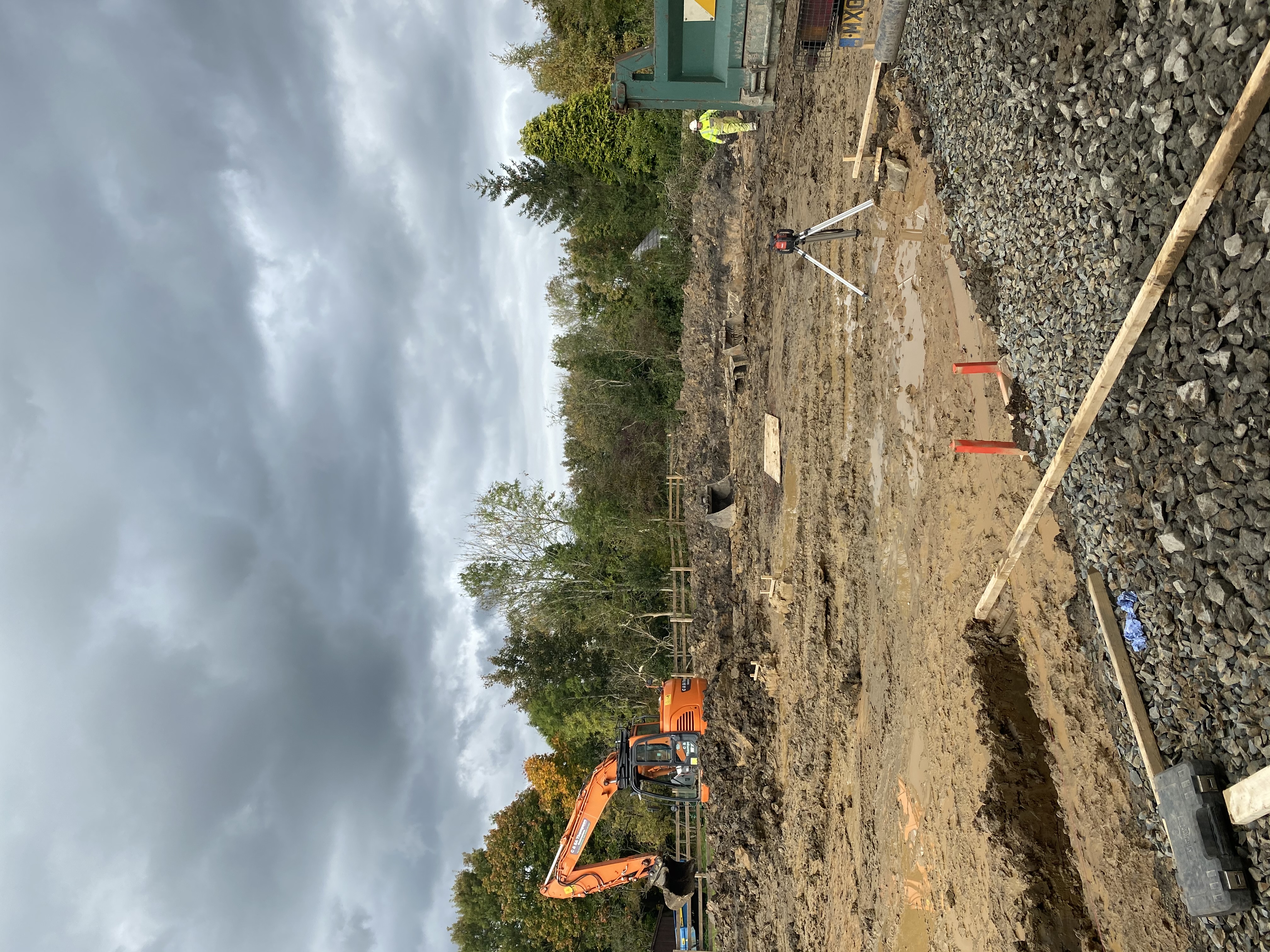
Construction site with muddy ground, orange excavator, a construction worker in yellow safety gear, and a tripod near a green truck under a cloudy sky.

Our Land Contamination Assessment Services

Phase Ground Investigation offers a full range of services designed to identify, quantify, and manage land contamination risks.

Phase 1 Contamination Assessment (Desk Study)

A non-intrusive, desk-based study that includes:

  • Historical land use analysis
  • Geological, hydrological, and environmental review
  • Environmental database searches
  • Planning and regulatory history review
  • Development of a Preliminary Conceptual Site Model (CSM)
  • Initial risk evaluation

This stage identifies whether potential contamination risks exist and whether further investigation is necessary.

Phase 2 Intrusive Contamination Investigation

Where the Phase 1 study identifies possible risks, a Phase 2 investigation confirms the presence, type, and extent of contamination.

Typical activities include:

  • Soil sampling via trial pits, augers, or window sampling
  • Groundwater and surface water sampling
  • Ground gas and vapour monitoring
  • Laboratory testing for metals, hydrocarbons, solvents, asbestos, etc.
  • Quantitative risk assessment
  • Updated Conceptual Site Model and recommendations

Results from this stage support planning submissions and allow for informed development decisions.

Phase 3 Remediation Strategy & Design

If contamination is confirmed, we prepare a detailed Remediation Strategy outlining the mitigation measures required. Strategies may include:

  • Soil removal or treatment
  • Gas protection systems
  • Groundwater remediation
  • Capping layers
  • Clean cover systems
  • Excavation and disposal approaches
  • Long-term monitoring programmes

Our designs are fully compliant with planning conditions and environmental regulations.

Phase 4 Verification & Validation Reporting

Once remediation works are complete, a Verification (Validation) Report is produced. This document confirms that all remediation requirements have been met.

A verification report is essential for:

  • Discharging planning conditions
  • Demonstrating regulatory compliance
  • Obtaining building completion
  • Reducing future environmental liability

Why Choose Phase Ground Investigation?

Experienced & Qualified Specialists

Our team includes environmental scientists, engineers, geologists, and contaminated land practitioners with extensive experience across all types of development sites.

Complete End-to-End Service

From Phase 1 to verification, we provide everything required to understand and resolve contamination risks.

Clear, Practical Advice

We present complex information in plain language, with actionable recommendations to support confident decision-making.

Fully Planning-Compliant Reports

All reports follow:

  • NPPF (National Planning Policy Framework)
  • LCRM (Land Contamination Risk Management, formerly CLR11)
  • BS10175 (Investigation of Potentially Contaminated Sites)
  • · Local Authority requirements
Efficient reporting with no unexpected costs.

We translate complex geotechnical engineering into clear, understandable recommendations for developers, architects, and homeowners.

Nationwide Coverage

We provide assessments for projects of all sizes across the UK.

Common Sources of Land Contamination

Typical contamination origins include:

  • Historic industrial sites
  • Fuel storage and tank leaks
  • Car repair garages and workshops
  • Landfill and waste disposal facilities
  • Chemical manufacturing or storage
  • Agricultural pesticides and fertilisers
  • Railways, depots, and transport yards
  • Foundries, collieries, and gasworks
  • Asbestos-containing materials

Identifying these risks early helps avoid delays and unforeseen remediation costs.

Image
Image

Planning Requirements for Contaminated Land

Local authorities often require contaminated land reports as part of planning applications, particularly for brownfield development. Depending on the site, planning conditions may specify:

  • Phase 1 Desk Study
  • Phase 2 Intrusive Investigation
  • Remediation Strategy
  • Verification Report

Phase Ground Investigation provides all relevant documentation needed to discharge these requirements effectively.

Begin Your Land Contamination Assessment

Phase Ground Investigation provides professional, reliable, and planning-ready land contamination assessments for developers, consultants, planners, and landowners across the UK.
Our expertise ensures your project complies with regulations and progresses without unnecessary delay.

Thank you! Your submission has been received!
Oops! Something went wrong while submitting the form.