info@phasegroundinvestigation.co.uk

0330 133 0421

What Is a Phase 1 Desk Study and Why Does It Matter?

A Phase 1 Desk Study forms the foundation for assessing potential environmental and ground-related hazards. It provides an early warning system for issues that may impact development feasibility, affect human health, influence foundation design, or delay planning approval.

One of its primary functions is to identify whether contamination risks exist due to past land uses. These risks might stem from previous industrial operations, fuel storage, waste disposal, chemical handling, or long-forgotten activities that are not immediately visible on the ground.

It also helps identify geological hazards such as compressible soils, shrink–swell clays, solution features, unstable ground, or shallow groundwater conditions that could affect construction. Understanding these risks early allows engineers and designers to incorporate appropriate mitigation measures.

A Phase 1 Desk Study also evaluates environmental receptors such as controlled waters, aquifers, sensitive habitats, and nearby residential communities. By assessing pathways between potential hazards and receptors, we build a clear risk profile for the site.

Local authorities frequently require a Phase 1 Desk Study for planning applications—even for relatively small developments. Mortgage providers, insurers, and legal advisers may also request these assessments during property transactions to ensure that environmental liabilities are properly understood.

Completing a Desk Study early in the process reduces uncertainty, prevents unnecessary delays, and provides clarity for both developers and regulators.

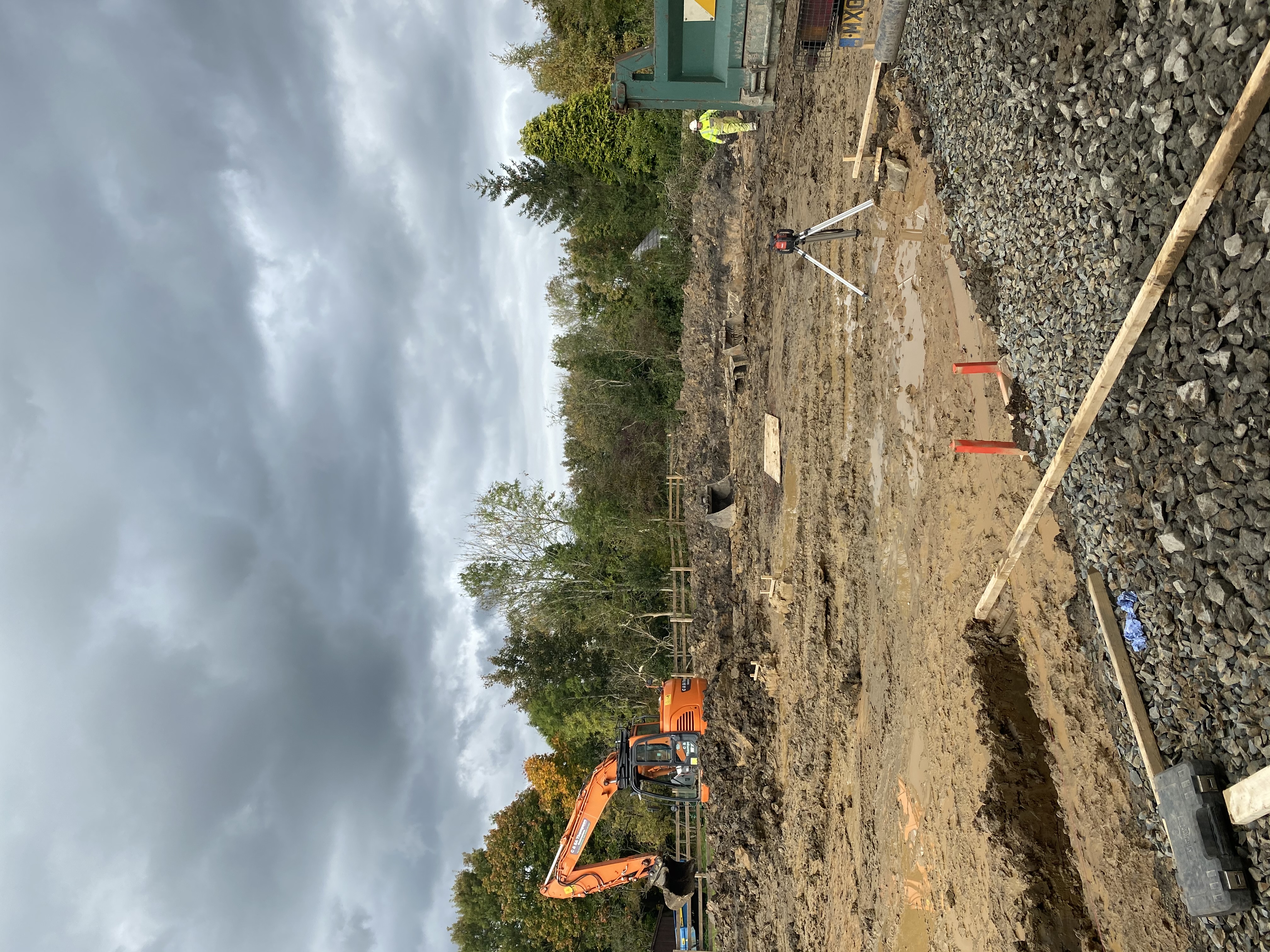
Construction site with muddy ground, orange excavator, a construction worker in yellow safety gear, and a tripod near a green truck under a cloudy sky.

Order a Phase 1 Desk Study Today

Order a PhaseFixed Prices – Fast Delivery – Nationwide Coverage

We offer two straightforward, fixed-price options designed to meet different project requirements and budgets. This ensures you know exactly what to expect before placing an order—there are no hidden extras and no additional charges for standard datasets.

1. Phase 1 GeoEnvironmental Desk Study (with Site Walkover)

£800 + VAT

This option includes a professional site walkover, conducted by one of our experienced engineers. A walkover is often required by local authorities, particularly for planning applications in areas with previous industrial activity, known contamination sources, or environmental sensitivity.

During the walkover, we gather visual evidence, assess ground conditions, and verify potential risks identified during the desktop review. This ensures a more robust assessment and provides greater confidence in the final report.

This is the ideal option if you intend to submit the report as part of a planning application or if the site is likely to present environmental or geotechnical complications.

2. Phase 1 GeoEnvironmental Desk Study (desktop only)

£550 + VAT

Our desktop-only assessment is a cost-effective solution for early-stage feasibility work, due diligence for property transactions, or situations where a walkover is not required. This option includes all data reviews, environmental searches, historic map analysis, geological interpretation, and risk assessment—without site access.

The desktop-only version is particularly useful for mortgage lenders, insurers, purchasers, and developers exploring a site’s viability before committing to further investment. It still provides a complete risk appraisal based on available records.

Delivery Times

Reports are typically delivered within 1–6 working days, depending on site access, availability of historical data, and response times from local authorities. We can accommodate urgent deadlines where required.

What Our Phase 1 Desk Study Includes

Our Phase 1 Desk Studies offer more than a simple collection of data. Each report is an interpretative analysis carried out by qualified geologists, engineers, and environmental specialists. We provide clear conclusions, well-reasoned recommendations, and practical guidance tailored to your project.

Historical Land Use Review

We undertake a detailed review of historic Ordnance Survey maps, trade directories, county records, and aerial photographs. This allows us to identify previous industrial activities such as factories, mills, chemical works, service yards, filling stations, depots, quarries, landfills, and military uses.

By evaluating historical changes over time, we can pinpoint potential contamination sources and determine whether they may impact the development site.

Geological, Hydrological & Environmental Assessment

We analyse geological mapping, BGS records, hydrogeological data, soil characteristics, groundwater vulnerability, and flood risk assessments. This helps determine ground conditions such as stability, drainage issues, compressibility, shrink–swell behaviour, and potential contamination migration pathways.

Flooding, high groundwater levels, or permeable strata can also influence the design of foundations, retaining structures, SuDS systems, and below-ground infrastructure.

Regulatory Database & Local Authority Search

Our reporting includes data from:

  • Environmental registers
  • Pollution incident databases
  • Hazardous installations
  • Landfill and waste sites
  • Water discharge permits
  • Contaminated land records
  • National incident reporting systems

We also review planning histories to identify previous site uses, developments, or remediation works that may inform the risk assessment.

Conceptual Site Model (CSM)

A Conceptual Site Model is produced to summarise pollutant linkages between sources, pathways, and receptors. This model forms the basis for determining whether a Phase 2 Ground Investigation is required.

Recommendations & Next Steps

We outline whether further investigation is needed, what scope of works may be appropriate, and what mitigation strategies should be considered to support planning or development.

Site Walkover Survey

Where selected, we conduct a physical inspection to verify conditions on the ground. During the walkover we check for:

  • Ground staining
  • Fuel odours
  • Abandoned tanks
  • Unusual vegetation patterns
  • Manholes, vents, or pipework
  • Topographical changes
  • Surface water drainage issues

This allows us to confirm or challenge assumptions made during the desktop review.

Image

Why Choose Phase Ground Investigation?

Phase Ground Investigation is committed to delivering high-quality, reliable, and transparent reporting. Our team comprises experienced engineers, geologists, and environmental consultants who work across the UK on residential, commercial, and industrial projects.

We pride ourselves on offering fast turnaround times, clear communication, and competitive fixed pricing. Every report is tailored to the specific site and development proposal, ensuring it satisfies local authority and industry requirements.

We provide full-service support from feasibility stage through to intrusive investigations, laboratory testing, geotechnical design, ground gas monitoring, and remediation strategies. This makes us a trusted partner for developers, landowners, planners, and investors seeking end-to-end support throughout the entire investigation process.

After Your Phase 1 Desk Study

Once your report is complete, we provide it in PDF format, suitable for planning submission, legal review, or internal design purposes.

If the findings identify potential contamination, ground instability, or environmental risks, we can carry out a Phase 2 Ground Investigation that includes sampling, boreholes, trial pits, laboratory testing, and geotechnical assessment.

Our team is also equipped to deliver remediation design, verification reporting, and long-term monitoring where required. This end-to-end capability ensures that your development remains compliant at every stage.

Image